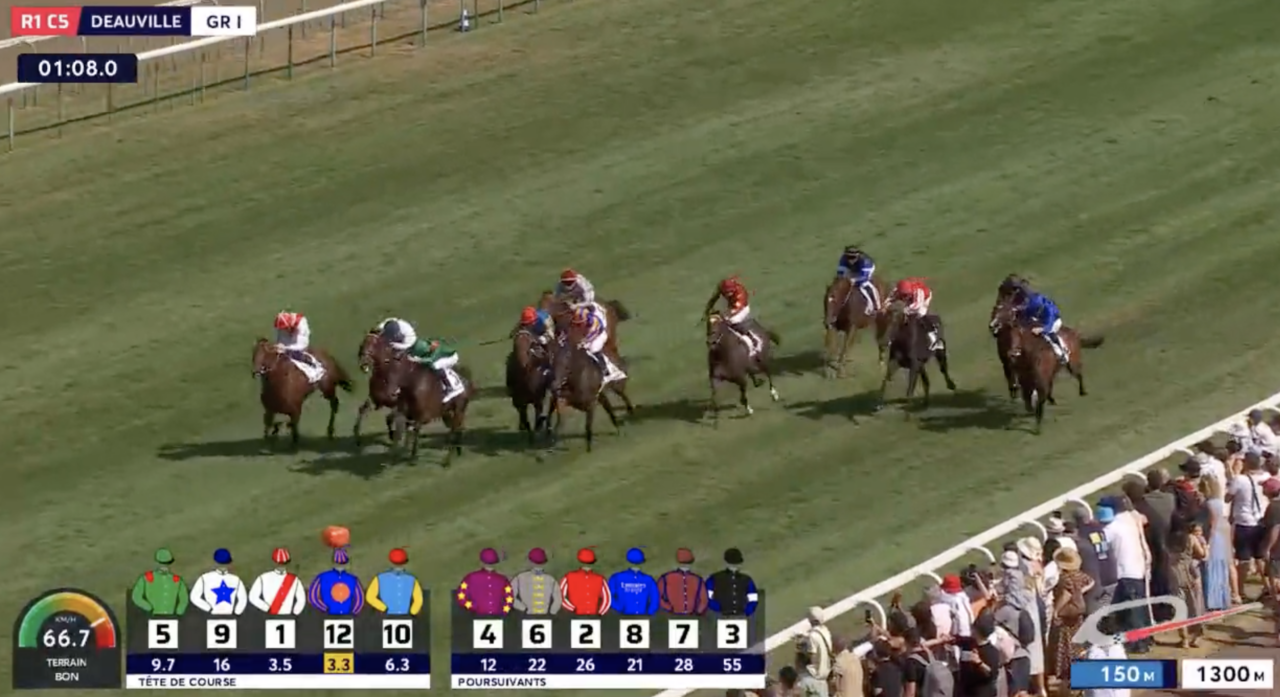
Deauville — 1,300 metres — 9 August 2026
The Prix Maurice de Gheest occupies a unique place in the European racing calendar. Its intermediate 1,300-metre distance brings together pure sprinters, more accustomed to 1,000–1,200 metres, and horses capable of sustaining their speed towards a mile. This distinctive profile makes it one of the most interesting Group 1 races to analyse through tracking data.
On Sunday, Samangan won in 1:16.40 — just 0.17 seconds slower than the average winning time since 2012 — covering the final kilometre in 58.76 seconds. The Francis-Henri Graffard-trained colt, racing for Aga Khan Studs, returned to Deauville after finishing fourth in the Prix Jean Prat a month earlier.
This time, the tracking data reveals an almost perfectly executed race.
A Race That Progressively Intensified
The pace remained relatively steady through the first part of the race before increasing significantly over the final 600 metres:
1,000–800 m: 11.44 s
800–600 m: 11.47 s
600–400 m: 11.17 s
400–200 m: 10.74 s
Final 200 m: 11.54 s
The decisive shift clearly occurred between the 600 m and 200 m markers.
The sectional dropped from 11.17 to 10.74 seconds, the fastest section of the race. Then, as often happens after such an intense effort, the pace eased to 11.54 seconds over the final 200 metres.
This was therefore not a race decided by a sprint launched only inside the final 200 metres. The real acceleration began 600 metres from home and peaked between the 400 m and 200 m markers.
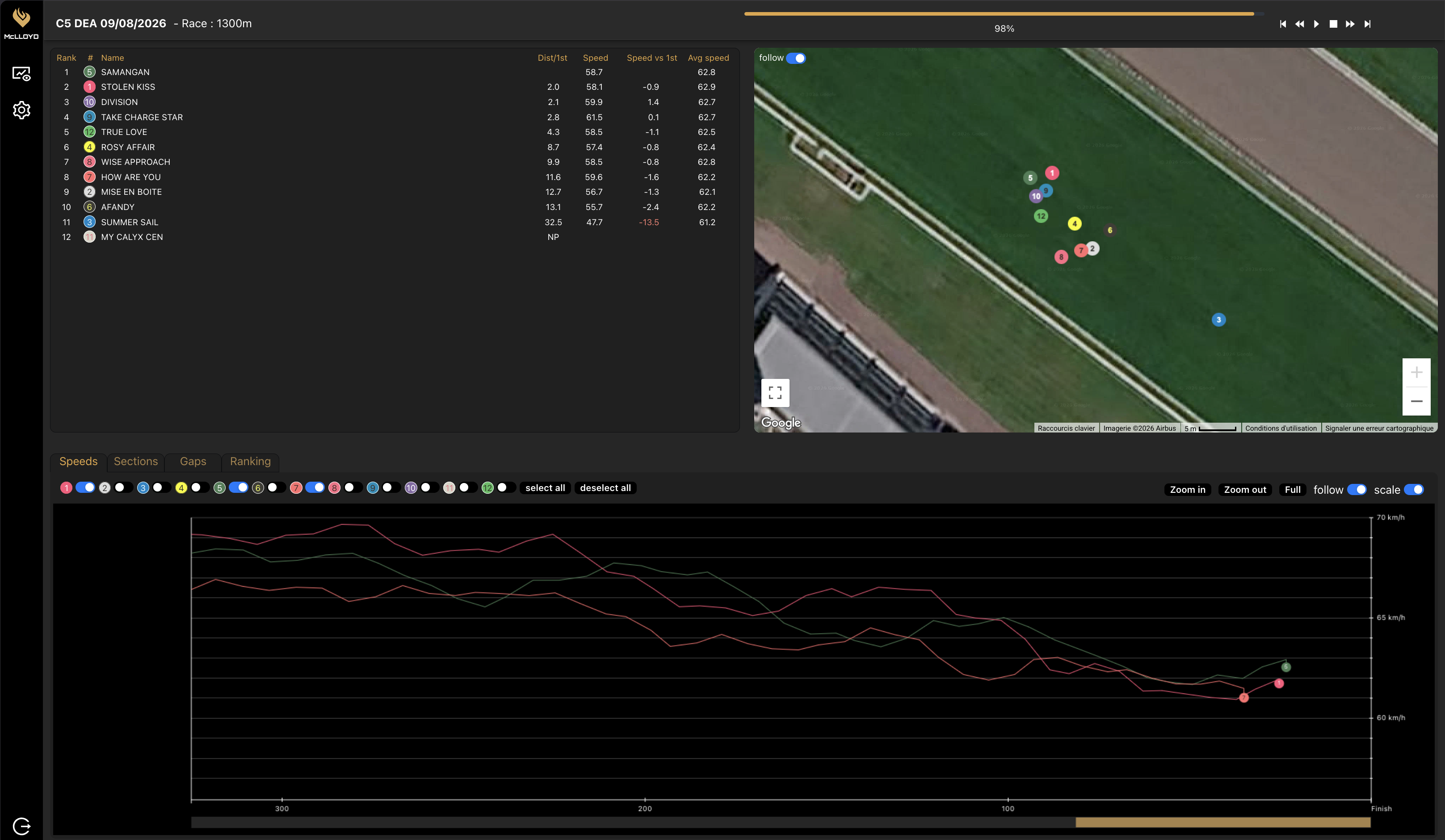
Access our replay tracking plateform here
Samangan: Always in the Right Place
Samangan spent almost the entire race in third position.
He did not set the pace, but neither did he have to make up ground from the rear.
His sectionals show a perfectly controlled progression:
1,000–800 m: 11.43 s
800–600 m: 11.43 s
600–400 m: 11.10 s
400–200 m: 10.68 s
Final 200 m: 11.54 s
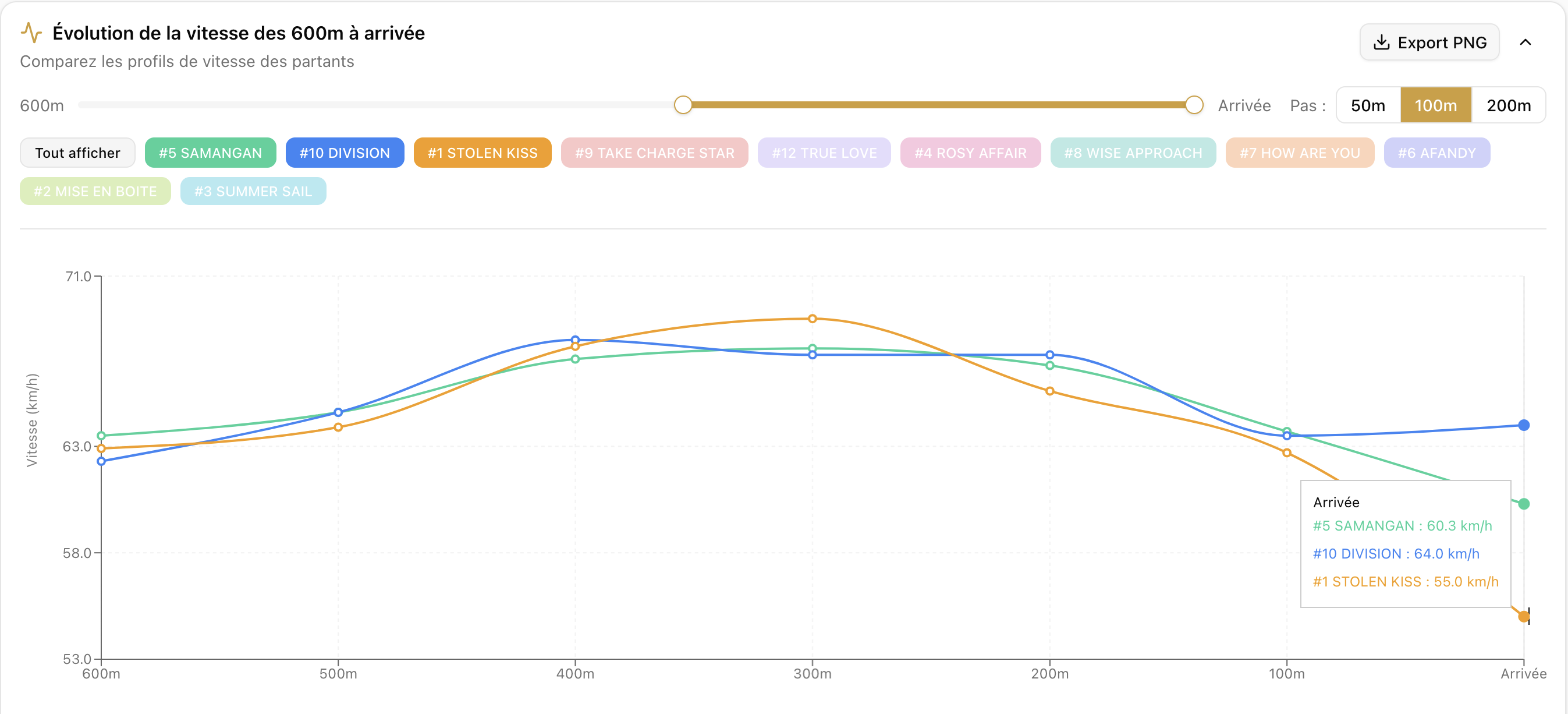
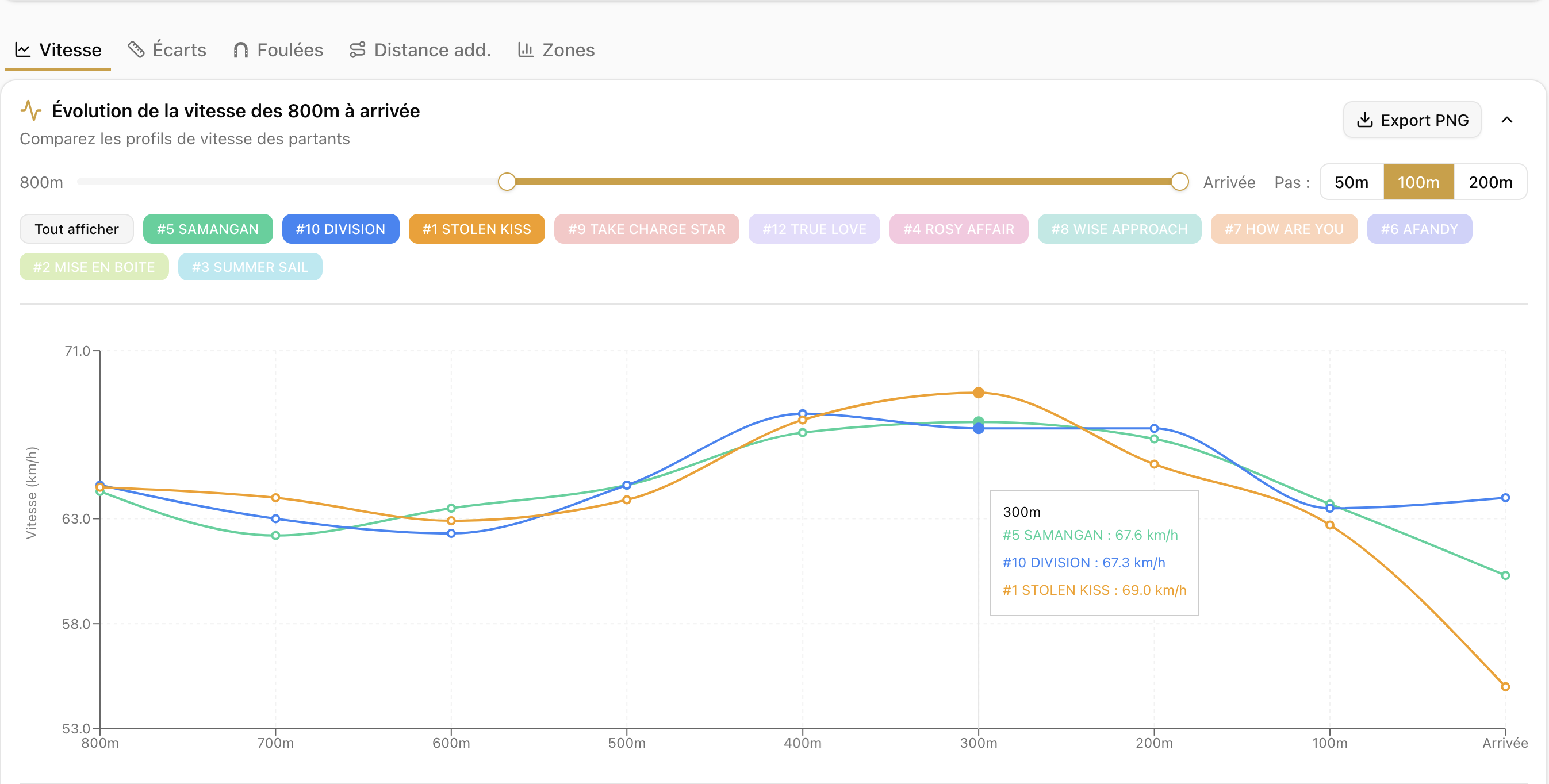
Between 400 and 200 metres, he averaged 67.6 km/h, took the lead and then maintained enough speed to hold off his challengers.
His key figures:
Final time: 1:16.40
Final 600 m: 33.32 s
Fastest split: 10.68 s
Top speed: 71.21 km/h
Average speed: 61.3 km/h
What makes the performance particularly interesting is that Samangan recorded neither the fastest final 600 metres nor the fastest individual sectional of the race.
He won because he produced his effort in the right place, at exactly the right time.
Division: The Best Finish… But Too Much Ground to Make Up
Division is probably the horse whose performance is most enhanced by the tracking data.
He raced between sixth and eighth for most of the contest and was still eighth with 400 metres to go, before producing a remarkable late run:
600–400 m: 11.07 s
400–200 m: 10.63 s
Final 200 m: 11.39 s
His 33.10-second final 600 metres were faster than Samangan’s 33.32 seconds.
Division went from eighth to second in just 400 metres.
Most significantly, he covered the final 200 metres in 11.39 seconds — 0.15 seconds faster than Samangan.
Yet it was not enough.
The race had effectively been lost before the final sprint: Division simply had too much ground to make up.
Stolen Kiss: The Sharpest Acceleration
Stolen Kiss produced a different kind of performance again.
Having raced towards the rear for much of the contest, she remained well off the leaders until 600 metres from home before unleashing her acceleration:
600–400 m: 11.03 s
400–200 m: 10.55 s
Final 200 m: 11.52 s
Her 10.55-second sectional was the fastest individual split among the finishers and equated to an average speed of 67.8 km/h over that section. She moved from ninth to third over the final 400 metres.
She covered her final 600 metres in 33.11 seconds, 0.21 seconds faster than Samangan.
Once again, the message is clear:
The sharpest acceleration does not guarantee victory when it has to compensate for several lengths of lost ground.
This finishing profile is not entirely new for Stolen Kiss. At Royal Ascot in June, the French racing press had already highlighted her powerful acceleration from the rear of the field.
The Hidden Value of Tracking: Who Spent the Longest at High Intensity?
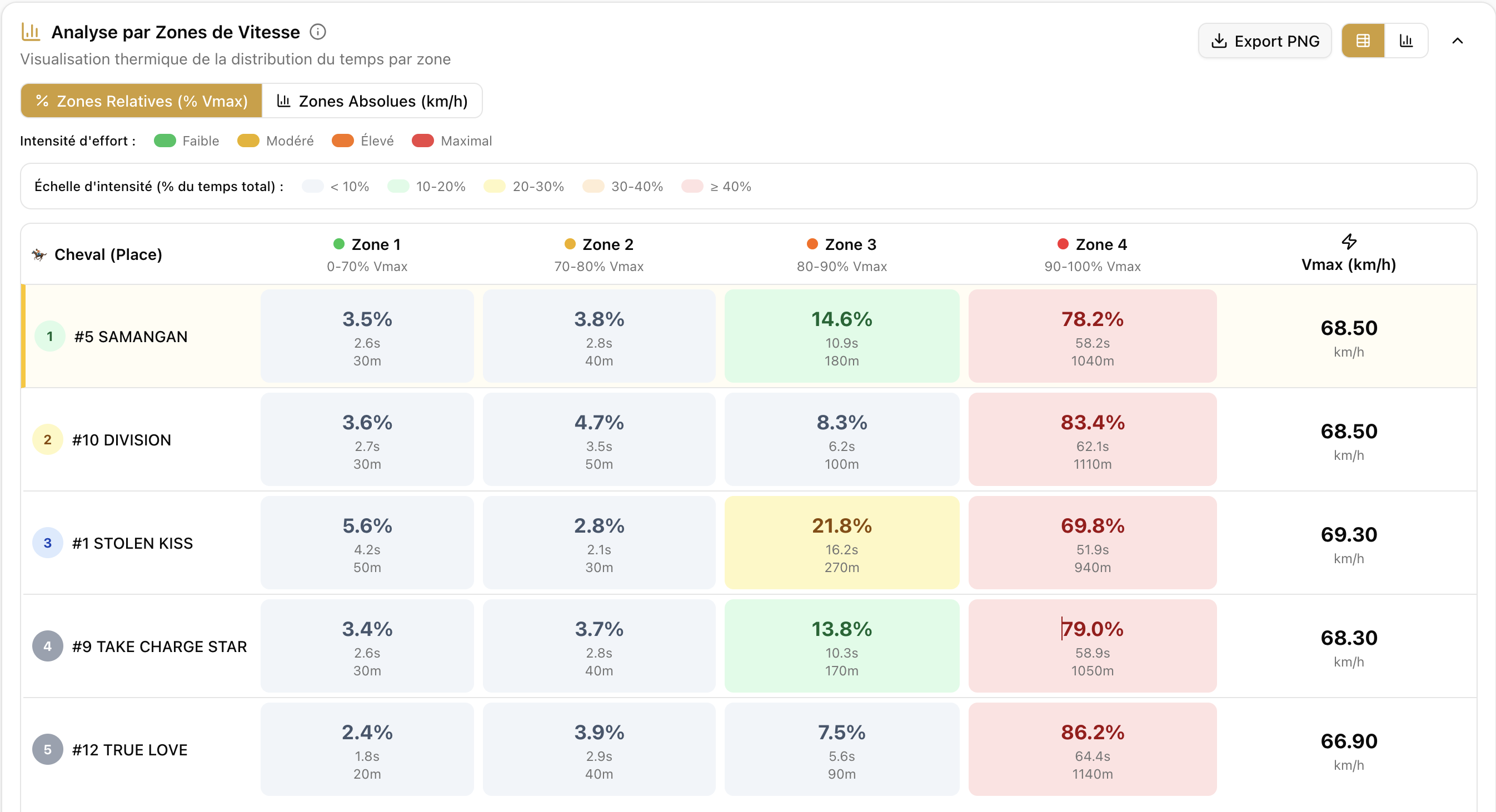
Sectional times show where horses accelerate. Speed-zone analysis takes this a step further by measuring how long each horse can operate close to its own maximum speed.
The data reveals very different performance profiles.
Stolen Kiss recorded the highest peak speed among the leading finishers, while Division spent a greater proportion of the race operating at very high intensity.
Samangan, meanwhile, did not dominate either metric. His advantage came from combining sustained high intensity with track position and perfectly timed acceleration.
In other words, tracking reveals several different ways of being fast: reaching a higher speed, sustaining a high percentage of maximum speed for longer, or deploying that speed at the most effective moment.
Samangan won through the third.